
General Dentistry
Children’s Dentistry at Shields Dental & Orthodontic Clinic
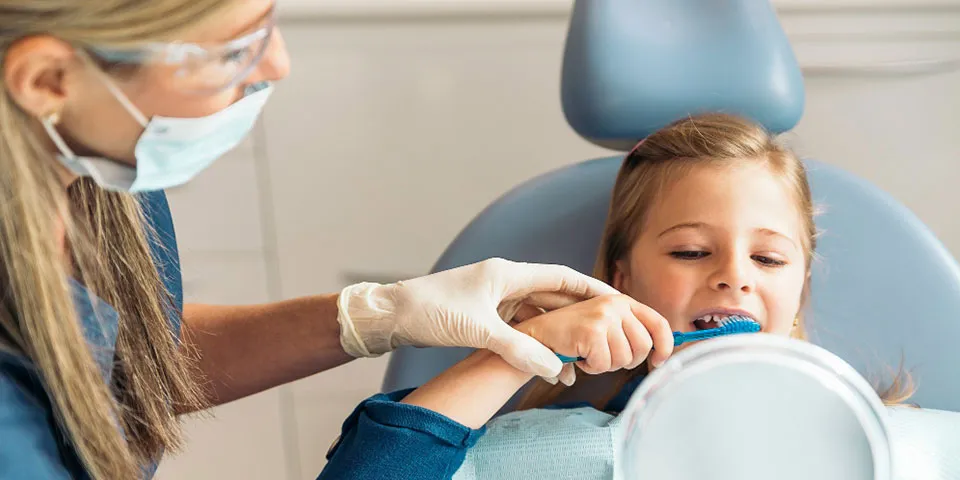
It’s Never Too Early for Children’s Dentistry
It’s never too early to begin a life of positive dental care, and we understand it can be challenging to find a trusted children’s dentist. Children may feel nervous, especially during their first dental visit, but early experiences shape future habits.
It is generally encouraged to bring your child to visit the dentist before their first birthday. Early dentistry for children has numerous benefits, from teaching healthy habits to prevent tooth decay and gum disease.
At Shields Dental Clinics in Limerick, Castletroy, and Roscrea, our experienced paediatric dentists take the stress out of dental appointments. Our dental clinic offers expert dentistry for kids in a calm, supportive setting.
 Benefits of Taking Your Child to a Children’s Dentist
Bringing your child to a children’s dentist early helps prevent the onset of tooth decay and builds familiarity with their paediatric dentist. It also reduces dental anxiety in children and adolescents, creating a sense of comfort that can last a lifetime. By encouraging regular visits from a young age, you support their long-term oral health into adulthood and help avoid dental emergencies later in life.
We also provide guidance on:
- Preventing dental fluorosis
- Choosing appropriate fluoride toothpaste
- Teaching children brushing techniques based on age
- Caring for baby teeth and milk teeth
- Preparing for when permanent teeth erupt
Frequently Asked Questions About Children’s Dentistry
At what age should kids start going to the dentist?
Children should visit the dentist by their first birthday or within six months of their first tooth erupting. Early dental visits help your kids dentist monitor tooth development, teach good habits, and prevent early signs of tooth decay or gum disease.
What are fissure sealants?
Fissure sealants are a protective dental treatment that involves applying a thin plastic coating to the chewing surfaces of back teeth (molars and premolars). They help prevent cavities by sealing the grooves where food and bacteria often get trapped — a key part of preventative care in paediatric dentistry.
How long do fissure sealants last?
Fissure sealants can last several years with proper care, but should be checked regularly during dental check-ups. Your paediatric dentist may recommend reapplying them if they wear down or become damaged.
When should sealants be applied?
Sealants are applied as soon as the permanent teeth start to come through, usually from 6 to 7 years of age. The rest are sealed as soon as they appear. This usually happens from 11 to 14 years of age.
What is fluoride?
Fluoride is a natural mineral that is found in water and other natural sources. Fluoride can also be artificially added to drinking water, with amounts varying from area to area. Check with your local authority to check whether your local water supply is fluoridated. Many toothpastes now contain fluoride, and this is how most people get their fluoride. There are also fluoride supplements in the form of specially formulated gels, drops, tablets and mouthwashes. These are recommended for people who require added protection against decay.
Is fluoride safe?
Many reports have been published about the pros and cons of fluoride. After many years, the scientific conclusion is that fluoride is of great benefit to dental health. It helps to prevent decay, while causing no harmful side effects to general health.
What are the benefits of fluoride?
Over five decades of research has found that water fluoridation cuts dental decay by up to 60%. It does this by strengthening the tooth enamel. A level of one-part fluoride to 1m parts water (1ppm) is considered enough.
Should children have extra fluoride?
If the level in the water supply is low, it may be necessary for children to take extra fluoride in the form of a supplement. But these should be taken only on the advice and instruction of a dentist.
Are fluoride toothpastes enough?
In areas where the water supply is fluoridated, fluoride toothpaste provides additional protection. But children aged under 7 years old should use a toothpaste of lower fluoride content. If your local drinking water is not fluoridated, fluoride toothpaste is effective. There are fluoride supplements available for people who are more prone to dental decay.
Are there side effects from fluoride ingestion?
Campaigners against fluoridation claim that an overdose of fluoride can cause ‘brittle bone’ disease and digestive disorders. However, these suggestions have not been scientifically proven. Dental Fluorosis can occur when too much fluoride is taken. For example, if the water supply is already fluoridated and supplements are taken, dental fluorosis can result. It can also occur when children swallow toothpaste.
Fluorisis is caused when too much fluoride is absorbed while the enamel of the teeth is forming. In its mildest form, fluorosis appears as fine, pearly-white lines or flecking on the surface of the teeth, often discernible only to a dental expert. While severe fluorosis can lead to pitting of the enamel and discolouration, this is rare in this part of the world.
Do you do children's braces?
Yes, we do! You can read more about our Children’s Ortodontist here.
Which teeth should be sealed?
Sealants are applied to the back teeth—molars and premolars—which have pits and fissures on their biting surfaces. Some teeth naturally form with deep grooves, which need to be sealed. Those with shallow grooves which will not required sealing.
What is involved?
This quick, straightforward process takes only a few minutes per tooth. The tooth is thoroughly cleaned, prepared and dried, before liquid sealant is applied and allowed to set. It is totally pain-free and the teeth will not feel different afterwards.
Do my children still have to clean their teeth?
Yes, cleaning is vital. The smooth surface of a sealed tooth makes it much easier to keep the teeth healthy through normal toothbrushing with a fluoride toothpaste.
What is the right way for my child to brush their teeth?
One of the best tips for teaching your children how to brush their teeth is to lead by example. Bring your child with you to the bathroom when you brush your teeth and talk it through with them.
Also, brush in front of a mirror because children are visual learners and will learn to replicate your actions while watching themselves in the mirror.
Don’t use threats because they create a negative association with brushing and they also begin to associate the dentist with punishment.
Use a visual timer as it can help kids understand the time frame that they have for brushing.
Finally, visit a dentist regularly and ensure that it treated as a positive, normal experience.