
General Dentistry
Tooth Removal
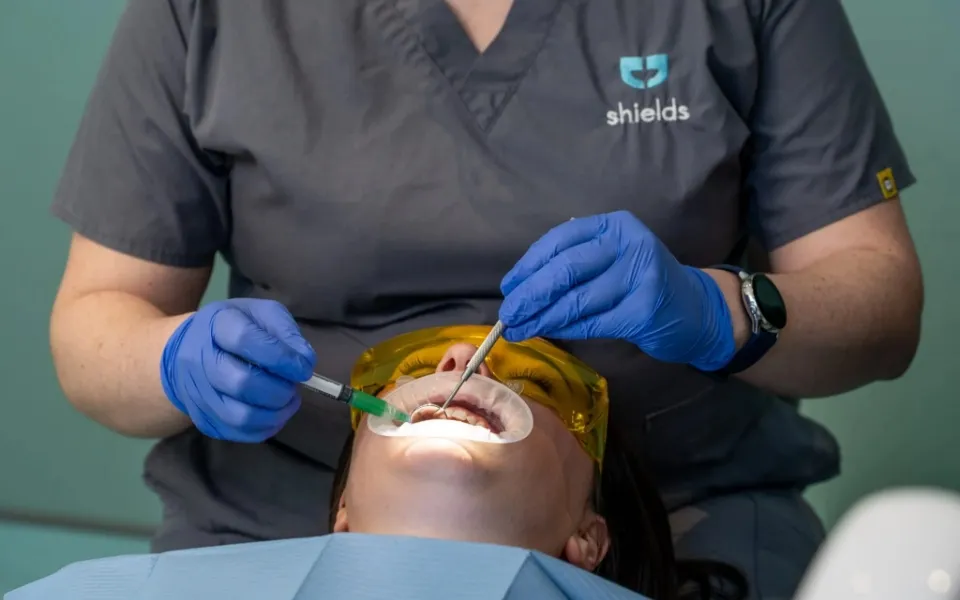
Sometimes it’s the only option, but we’ll make it painless and as effortless as possible.
Regretfully, it can come to a point where a failing tooth just has to go, and we have to prepare you for tooth removal. It may sound severe but our surgeons are ready to ensure that this routine process is always as painless as possible.
Tooth removal is usually the method proposed in situations of severe decay, or when your jaw lacks sufficient space to permit wisdom teeth come through painlessly or without impacting on the teeth in front.
The Process
Our team uses a strong anaesthetic to completely numb the area during treatment and if you are particularly nervous, we are also skilled in the administration of dental sedation.
Furthermore, there are many options to choose from so don’t worry because your comfort throughout the treatment is our highest priority. As part of any extraction treatment, we advise on options for replacing these missing teeth.
Our general recommendation is dental implants and we have highly skilled and experienced oral surgeons who can advise you further on this. We also offer a free first consultation on dental implants.
Wisdom tooth extraction.
Adults can have up to 32 teeth. The wisdom teeth are the last to come through, at the back, usually between the ages of 17 and 25 years, although sometimes they can appear years later. Nowadays, the maximum number of teeth that the adult jaw can accommodate is 28.
Impacted wisdom teeth.
An ‘impacted wisdom tooth’ can be one of the most common reasons for extraction: when there is not enough space for the wisdom tooth to come through properly, forcing it to either grow at an angle or get stuck against the tooth in front.
What to expect afterwards.
The amount of discomfort depends on how easily the tooth was taken out. There is usually some swelling and discomfort for a few days and you should follow any advice you receive, to help with the healing.
Some people also find homeopathic remedies help to reduce discomfort useful. Painkillers such as paracetamol or ibuprofen will usually deal with any pain. However, it is best to stay fairly quiet and relaxed for 24 hours afterwards to ensure there are no bleeding problems.
Some stitches may be required to help the gum heal over, and your dentist will want to see you again, probably a week later, to check on the healing or to remove any stitches.
Patients who undergo extraction at Shields Dental Clinics can also be assured of full guidance on what to do in the period immediately following the extraction.
Tooth Removal FAQs
Do not rinse the area for the first 24 hours. This allows the socket to heal, and reduces the chance of you damaging the blood clot. If the clot is damaged, the socket can become inflamed, affecting the healing process.
For at least 24 hours, avoid alcohol, as it can encourage bleeding and delay healing. Smoking should also be avoided for as long as possible, and at least for the rest of the day after extraction. It’s important not to do anything that will increase the blood pressure, which can lead to further bleeding. Lukewarm food and liquids can be eaten and drank as normal, but avoid chewing on that area of your mouth.
There may be some slight bleeding for the first day or so, and sometimes when a small amount of blood is mixed with a larger amount of saliva, it can look more dramatic than it actually is. If there is some bleeding, do not rinse, but carefully place a folded piece of clean cotton material over the extraction site, and apply pressure by biting firmly on the material for at least 15 minutes. If the bleeding has not stopped after an hour or two, contact your dentist.
It is extremely important to keep your mouth clean after an extraction, but you should be careful and gentle when cleaning around the extraction site.
There is usually some tenderness in the area of the extraction for the first few days. Do not take aspirin, as this will make your mouth bleed. In most cases, simple pain relief—what you would normally take to alleviate a headache—should be sufficient to ease the discomfort. However, always follow the manufacturer’s instructions. If you are in doubt, check with your GP.
It is important to keep your mouth and the extraction site as clean as possible, making sure that the socket is kept clear of all food and debris. After the no-rinse initial 24-hour period, you should use a salt-water mouthwash—a teaspoon of salt in a glass of warm water—to gently rinse around the socket twice a day. You should do this for at least a week, or as long as your are advised to by your dentist. In the long term, a healthy diet, supplemented with Vitamin C, will help your mouth to heal.
Sometimes, the socket can become inflamed. This occurs when there is little or no blood clot in the socket and the bony socket walls are exposed. This is called a dry socket and in some cases is worse than the original toothache! It’s important to see your dentist, who may place a dressing in the socket and prescribe a course of antibiotics to help relieve the inflammation. It’s also important to note that it is perfectly normal to be able to feel the sharp edge of a tooth socket with the tongue, and that sometimes small pieces of bone may work their way to the surface of the socket.
It’s important not to use anything containing aspirin, as aspirin can thin the blood slightly and cause bleeding. Asthma sufferers should avoid Ibuprofen-based pain relief. Again check, with your chemist or dentist if you’re worried or feel you need something stronger.
The dentist will give you a follow-up appointment if the extraction has been particularly difficult, possibly to remove any stitches required, or simply to check how the area is healing. The dentist will also want to discuss the options for replacing the lost tooth.
If part of the wisdom tooth has appeared through the gum and part of it is still covered, the gum may become sore and perhaps swollen. Food particles and bacteria can collect under the gum edge, and it will be difficult to clean the area effectively. Your dentist will tell you whether this is a temporary problem that can be dealt with by using mouthwashes and special cleaning methods (and possibly antibiotics), or whether it is better to have the tooth removed.
If your gums are sore and swollen, use a mouthwash of medium hot water with a teaspoonful of salt. (Check that it is not too hot before using it.) Swish the salt water around the tooth, trying to get into the areas your toothbrush cannot reach. An antibacterial mouthwash such as Corsodyl can also reduce inflammation. Pain-relieving tablets such as paracetamol or aspirin can also be useful in the short term, but see your dentist if the pain continues.
If the pain does not go away or if you find it difficult to open your mouth, you should see a dentist. They will be able to see the cause of the problem, and tell you what to do. It may help to clean around the tooth very thoroughly, and the dentist may prescribe an antibiotic.
The dentist will usually take x-rays to see the position of the root, and to see whether there is room for the tooth to come through into a useful position.
It depends on the position and shape of the roots, which will be determined by an x-ray. Upper wisdom teeth are often easier to remove than lower ones, which are more likely to be impacted. Your dentist will decide on whether the tooth should be removed at the dental practice, or whether you should be referred to an oral surgeon at a hospital.
Very occasionally there is a possibility of some numbness of the lip after the removal of a lower tooth—your dentist will tell you if it is possible in your case. You will probably require a local anaesthetic—as you would require for a filling—or sedation. You could also have a general anaesthetic (where you would be asleep), but this will usually be given only in a hospital.
Taking wisdom teeth out may cause some swelling for a few days. But as soon as the area is healed, there will be no difference to your face or appearance. The mouth will feel more comfortable and less crowded, especially if the teeth were impacted.
Extracting a tooth leaves a small hole where that tooth used to be. This is known as a socket and it can become quite sensitive after an extraction. Nerves can become exposed if the blood clot gets knocked loose after the removal of a tooth.
A tooth extraction can also lead to bone loss and cosmetic issues due to moving teeth. Socket preservation helps to protect the alveolar ridge, which is the bone that surrounds your teeth’s roots.
The procedure involves the placement of PRGF – protein rich growth factors (centrifuged from your own blood) within the socket at the time of extraction, with or without bone grafting material (or scaffold). This creates a rich environment for improved bone regeneration which helps to preserve the hard and soft tissues.